
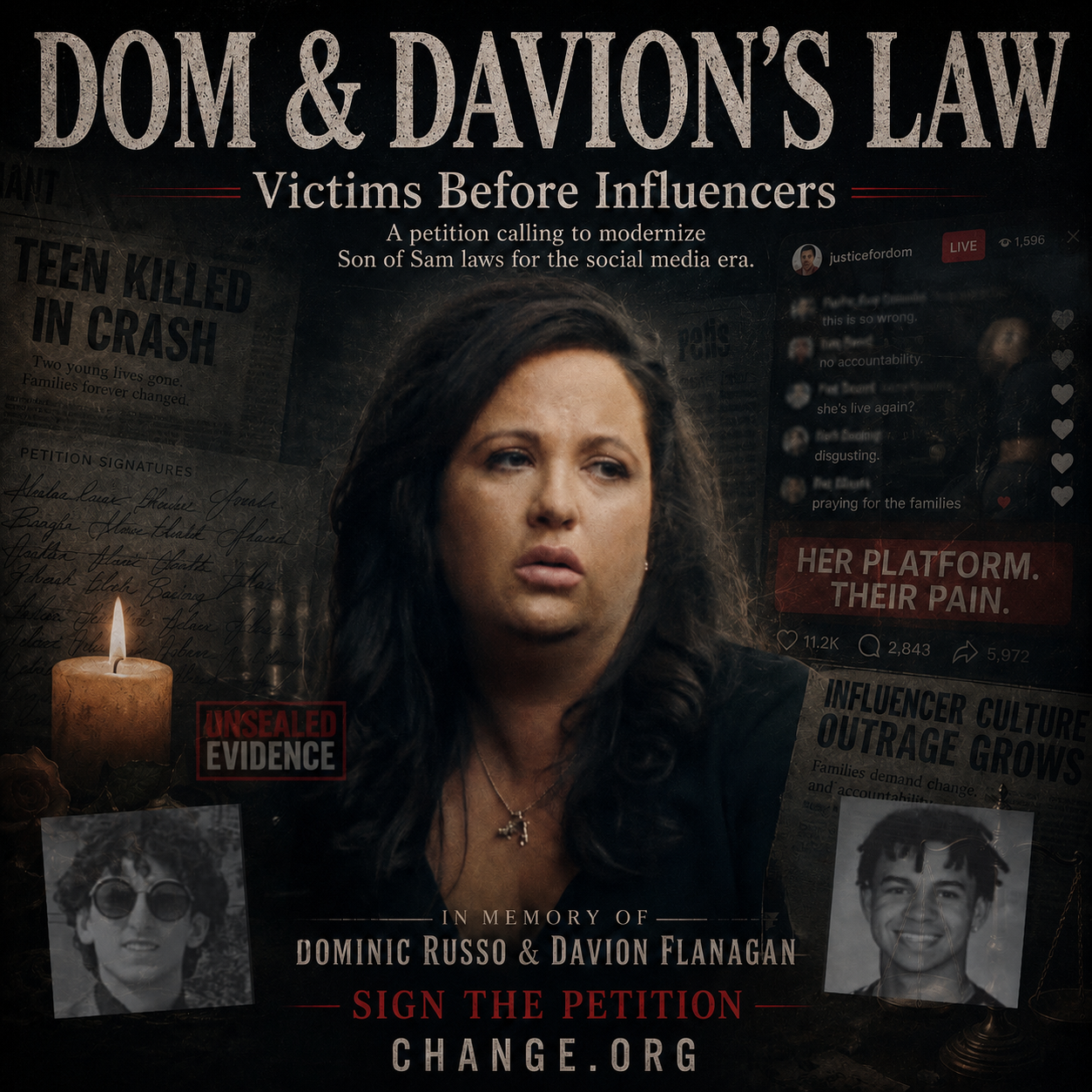
Dom & Davion’s Law: Could Social Media Finally Change “Son of Sam” Laws Forever?
As Netflix’s The Crash pushed the Mackenzie Shirilla case back into the national spotlight, Dominic Russo’s sister says her family is now facing a painful reality many victims’ families fear in the social media era: watching tragedy become content. Her newly launched “Dom & Davion’s Law” petition is sparking a larger national conversation about crime, monetization, influencer culture, and the emotional cost left behind for surviving families.
When Tragedy Becomes Content
Imagine losing someone you love in a violent, nationally known case, only to later watch the person convicted in that case gain followers, attention, interviews, supporters, donations, documentary fame, and online influence from the very tragedy that destroyed your family.
That is the painful reality Dominic Russo’s sister, Christine Russo, says her family is now facing after Netflix’s The Crash brought the Mackenzie Shirilla case back into the national spotlight.
Christine has launched a petition supporting what is now called Dom & Davion’s Law, an effort to modernize outdated “Son of Sam” laws for the social media age.
What Dom & Davion’s Law Is About
Traditional Son of Sam laws were originally created to prevent violent criminals from profiting from their crimes through things like book deals, movie contracts, and paid media opportunities.
But those laws were written long before TikTok, YouTube, livestreams, monetized podcasts, sponsorships, subscriptions, merchandise, viral fan pages, and influencer culture existed.
That is the heart of what Christine appears to be raising with this petition: the law has not kept up with the way attention, fame, and money move online now.
Today, a person connected to a high-profile violent case does not necessarily need a book deal or a movie contract to gain something from public attention. In the internet era, attention itself can become currency.
The Pain Victims’ Families Are Left Carrying
For families like Dominic Russo’s and Davion Flanagan’s, this is not some distant legal debate. This is personal. This is grief being dragged back into public view over and over again.
They lost two young men. Two sons. Two loved ones. Two people whose lives should never be reduced to a headline, a documentary topic, a viral argument, or background context in someone else’s public image.
Christine’s petition is not just about Dominic and Davion. It is about the larger fear that victims’ families may be forced to watch someone connected to their loved one’s death gain public attention, influence, or financial opportunity because of the case itself.
And honestly, whether someone agrees with every part of the petition or not, the conversation itself matters.
The True Crime World Has Changed
We now live in a world where criminal cases can become entertainment overnight.
Viral clips move faster than verified facts. Defendants gain fan pages. Supporters organize online. Prison interviews circulate across platforms. Documentaries revive old wounds. Comment sections turn real trauma into debate. Some people build entire online identities around violent cases while the victims’ families are left trying to remind the public who was actually lost.
That is one of the hardest parts of modern true crime culture: the public often remembers the name of the convicted person before they remember the names of the victims.
In this case, those names are Dominic Russo and Davion Flanagan.
Why This Petition Matters Beyond One Case
Dom & Davion’s Law raises a larger question that is becoming more relevant every year:
- Should someone convicted in a violent case be allowed to gain money, fame, or influence from that crime?
- Should social media monetization be treated differently than old-fashioned book or movie deals?
- Should victims’ families have more protection when a case becomes viral content?
- Should existing Son of Sam laws be updated for platforms like TikTok, YouTube, Netflix, podcasts, and livestreams?
- Where is the line between public interest, free speech, entertainment, and exploitation?
Those are not easy questions. But they are questions worth asking.
The internet has changed how crime stories spread. It has changed how people consume tragedy. It has changed how quickly someone can become known. And it has changed how long victims’ families are forced to live with public commentary surrounding the worst moments of their lives.
My Opinion
In my opinion, this is exactly the kind of conversation lawmakers need to start taking seriously.
Son of Sam laws were created for a different world. They were created before creator funds, viral documentaries, online supporters, digital subscriptions, livestream gifts, sponsored content, and influencer-style fame existed.
If the purpose of those laws was to stop people from profiting from violent crimes, then it makes sense to ask whether those protections still work in the world we live in now.
Because the uncomfortable truth is this: profit does not always look like a check from a publisher anymore.
Sometimes it looks like followers.
Sometimes it looks like interviews.
Sometimes it looks like public sympathy.
Sometimes it looks like donations.
Sometimes it looks like a platform.
And sometimes it looks like a family having to watch the person connected to their loved one’s death become more famous while the victims themselves are pushed further into the background.
Keeping Dominic Russo and Davion Flanagan at the Center
At the center of this conversation should be Dominic Russo and Davion Flanagan.
Not just the crash. Not just the documentary. Not just the person convicted. Not just the online arguments.
Dominic and Davion were real people. They had families. They had futures. They had people who loved them. Their names deserve to be remembered with dignity, not buried under viral commentary and internet spectacle.
That is why Dom & Davion’s Law matters.
It is not only about one petition. It is about whether our laws, our platforms, and our culture are willing to acknowledge the harm that can happen when violent tragedy becomes a source of attention, influence, or potential profit.
Final Thoughts
No matter where people stand on the Mackenzie Shirilla case itself, it is hard to deny that Dom & Davion’s Law raises important questions about crime, media, monetization, and the emotional cost carried by surviving families long after the headlines fade.
Christine Russo is asking people to look beyond the documentary, beyond the viral clips, and beyond the online arguments.
She is asking people to think about the families left behind.
And in a world where true crime can become content within seconds, that conversation is long overdue.
Continue Investigating
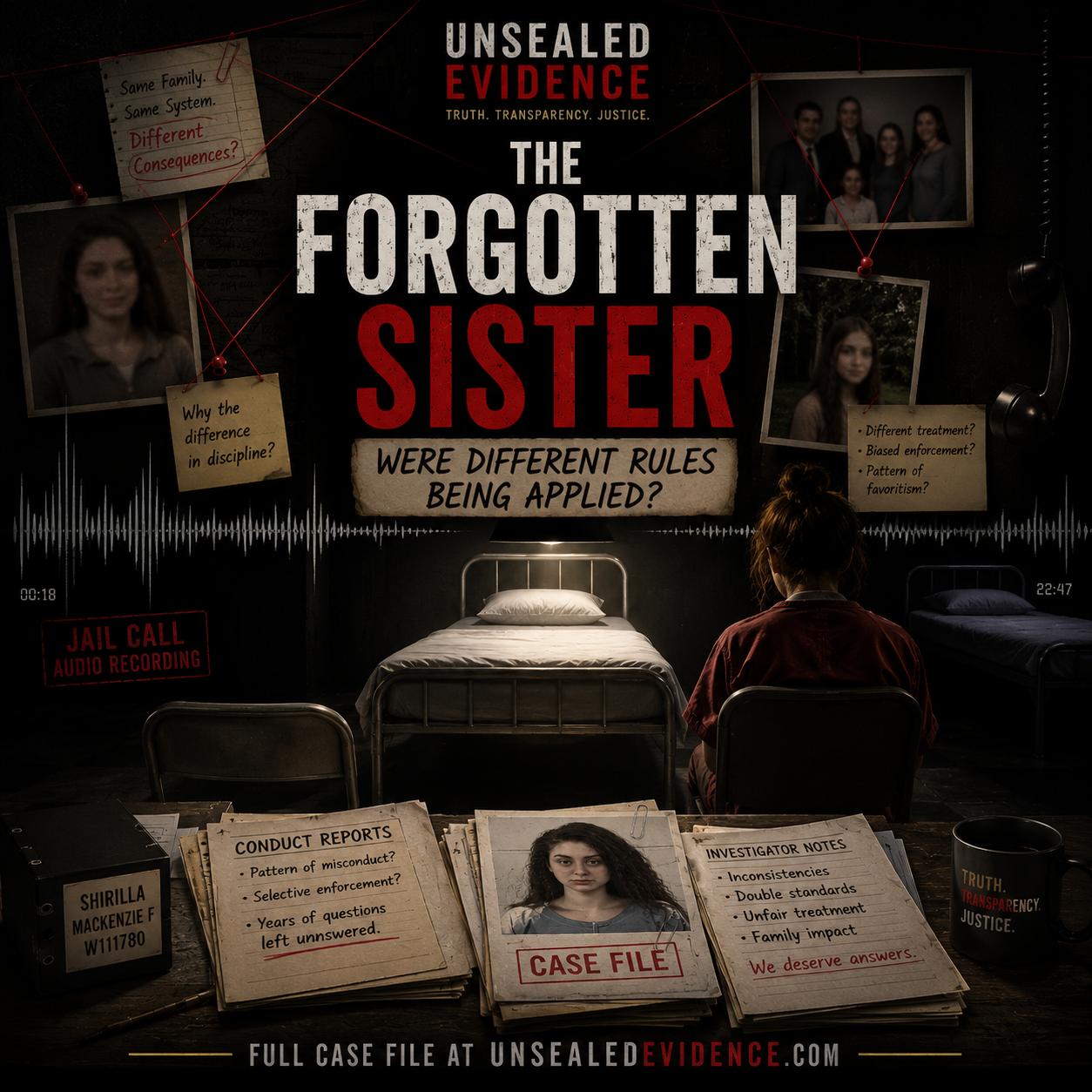
The Forgotten Sister: Was Danielle Shirilla Held To Different Standards Than Mackenzie?
One comment buried inside a recorded jail call has people asking a question few seem interested in discussing: what was life like for Danielle Shirilla? While Mackenzie Shirilla became the focus of documentaries, headlines, and public attention, her older sister remains almost entirely absent from the story. A remark about Danielle losing her bed frame has reignited conversations about whether both daughters were held to the same standards.
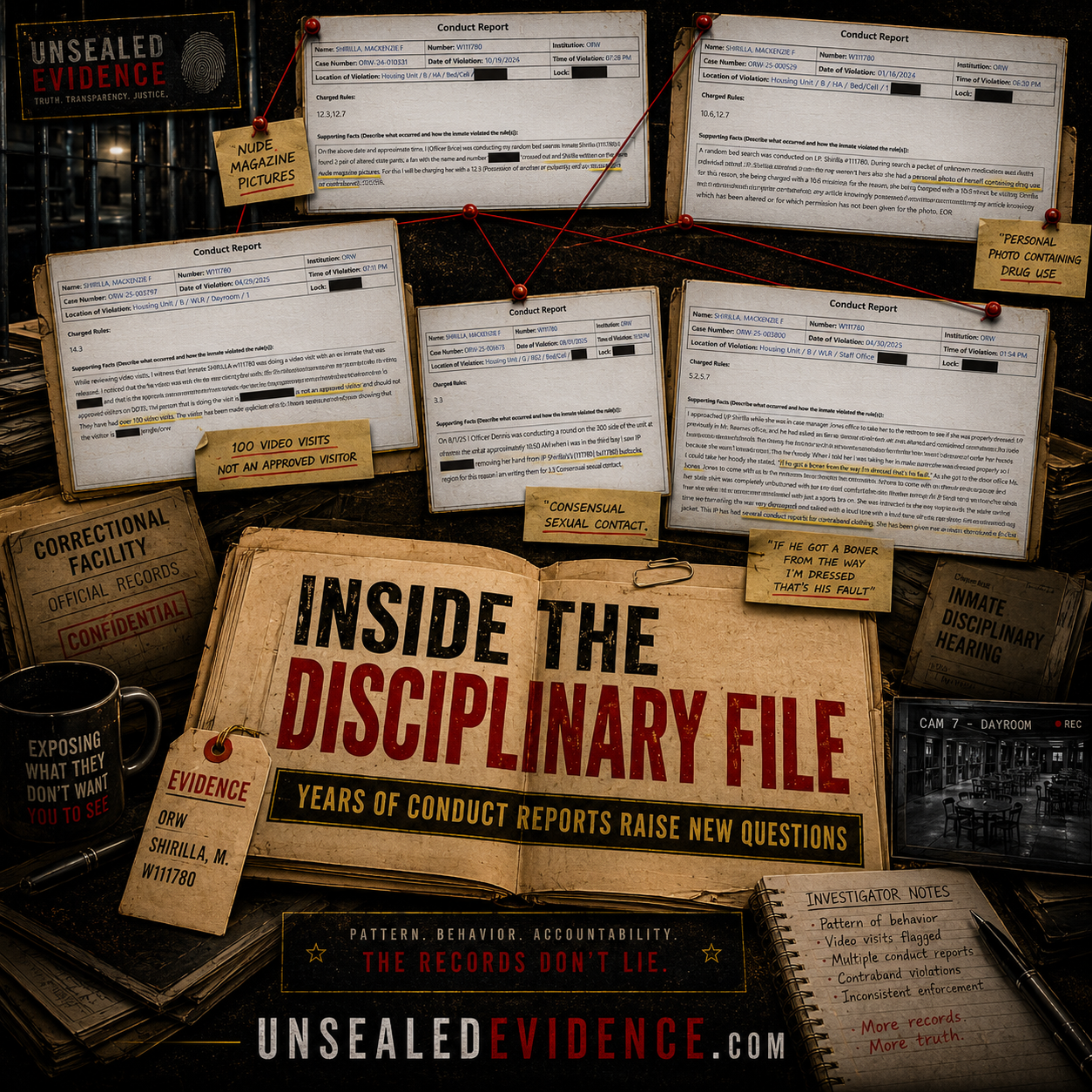
Nude Photos, Explicit Video Calls, Unauthorized Medication and More: Inside Mackenzie Shirilla's Prison Disciplinary File
What exactly has Mackenzie Shirilla been getting written up for while behind bars? Newly obtained disciplinary records reveal allegations involving nude magazine photos, unauthorized medication, explicit video calls, stolen property, contraband, and more.
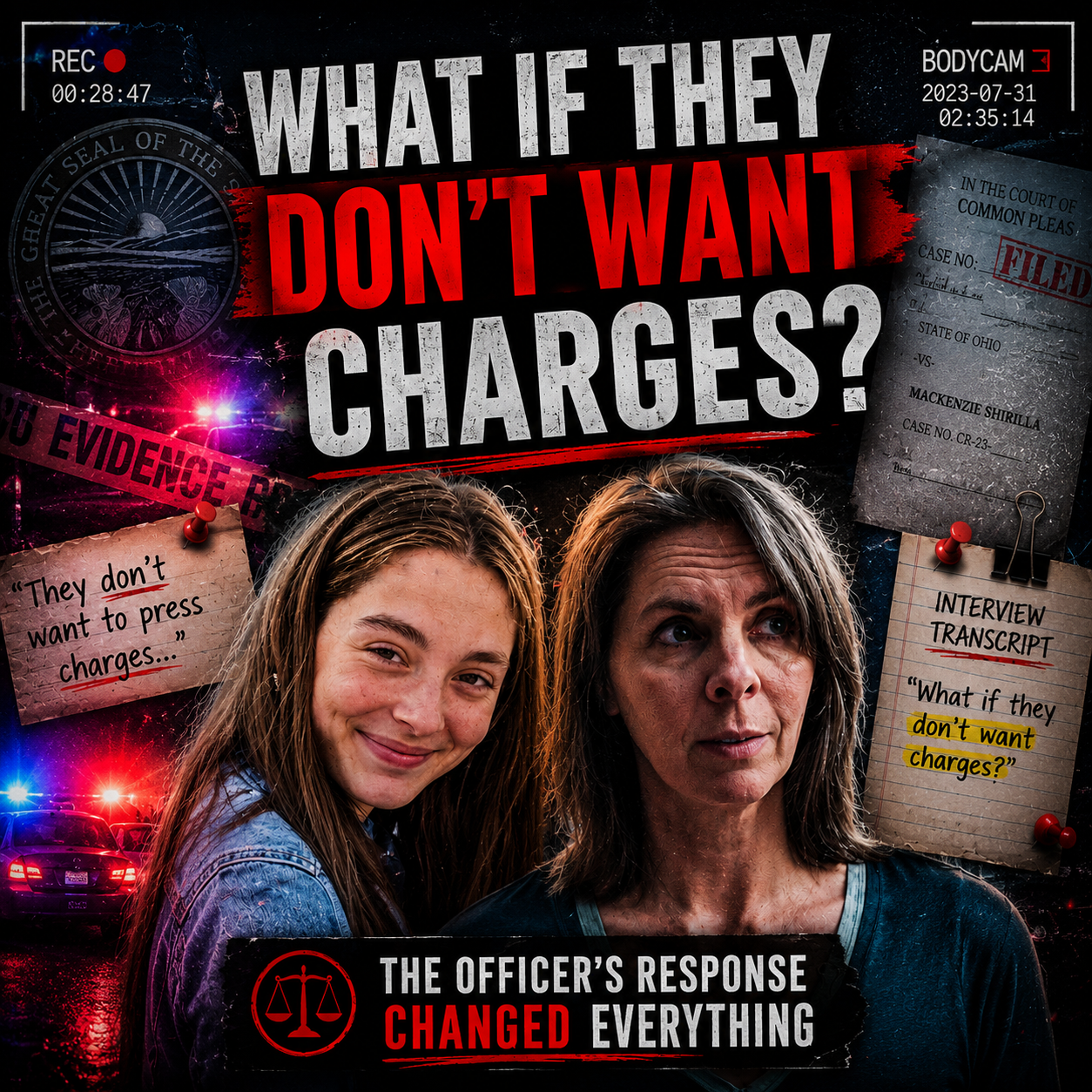
"What If The Families Don't Want Charges?" The Bodycam Exchange People Can't Stop Talking About
One of the most revealing moments in the newly released Mackenzie Shirilla bodycam footage has nothing to do with the crash itself. Instead, it centers on a conversation about whether Dominic Russo's and Davion Flanagan's families wanted criminal charges filed—and the officer's explanation of why that decision was no longer up to them.
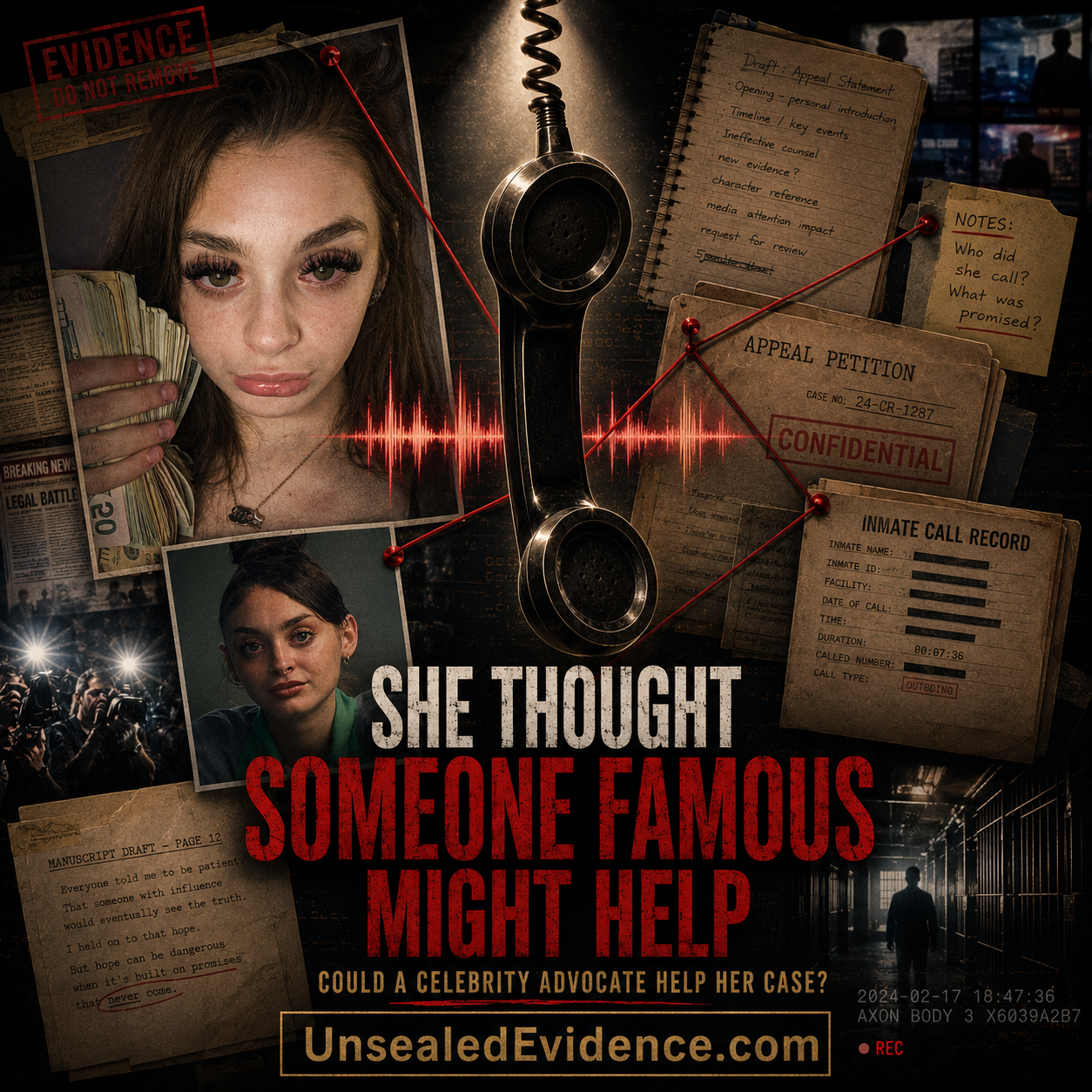
Kim Kardashian Reportedly Has No Interest In Mackenzie Shirilla's Case
Recorded jail calls revealed Mackenzie Shirilla discussing the possibility that Kim Kardashian might take an interest in her case. Days later, multiple media outlets reported that sources close to Kardashian indicated she has no plans to become involved, raising new questions about how Mackenzie and her family view public attention surrounding the case.
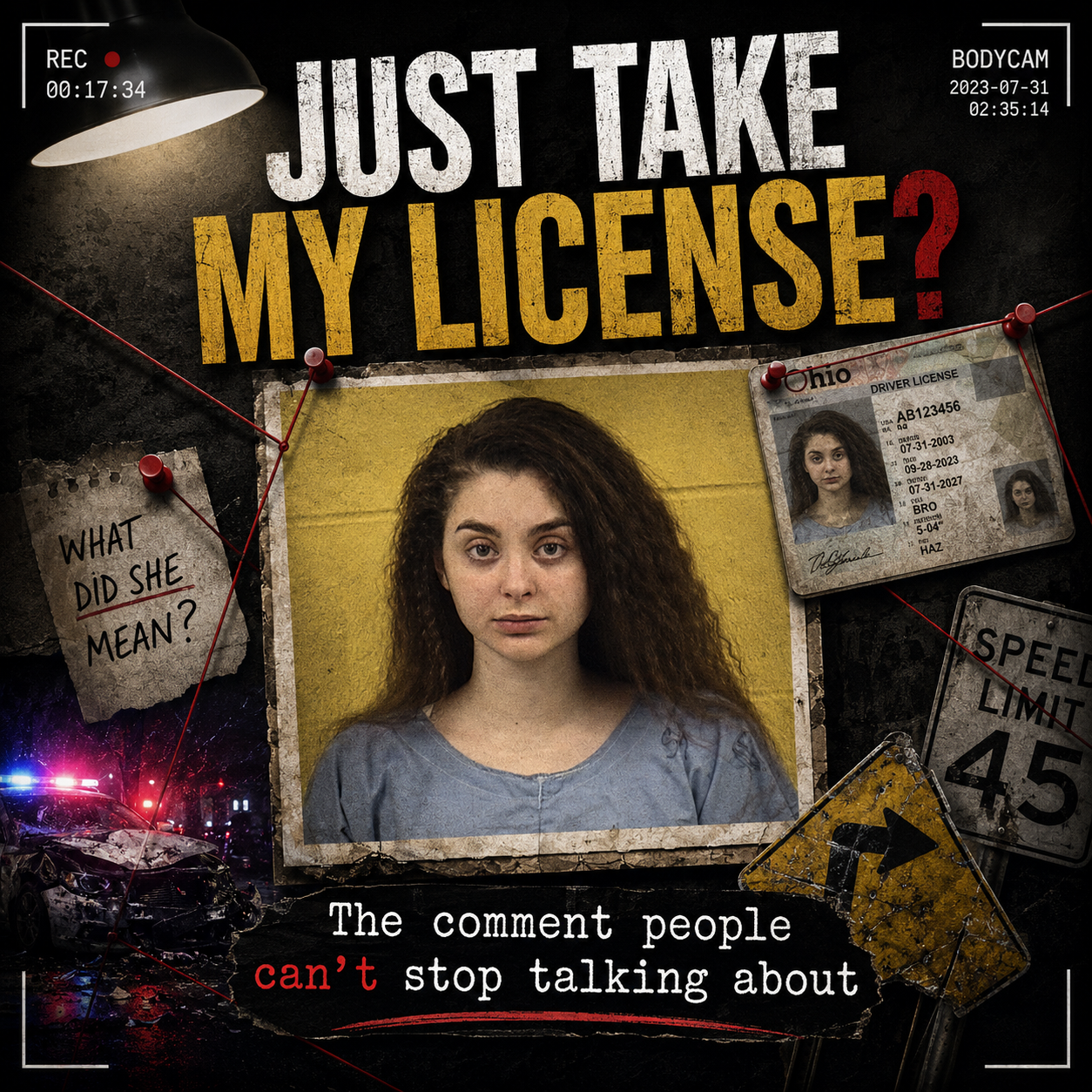
Did Mackenzie Shirilla Think Losing Her License Was the Worst Possible Outcome?
Among the newly released bodycam footage in the Mackenzie Shirilla case, one comment continues generating strong reactions. During a conversation with police, Mackenzie reportedly asked whether her driver's license could simply be taken away for ten years. Years later, critics still point to that exchange as a revealing glimpse into how she may have viewed the situation in the immediate aftermath of the crash.
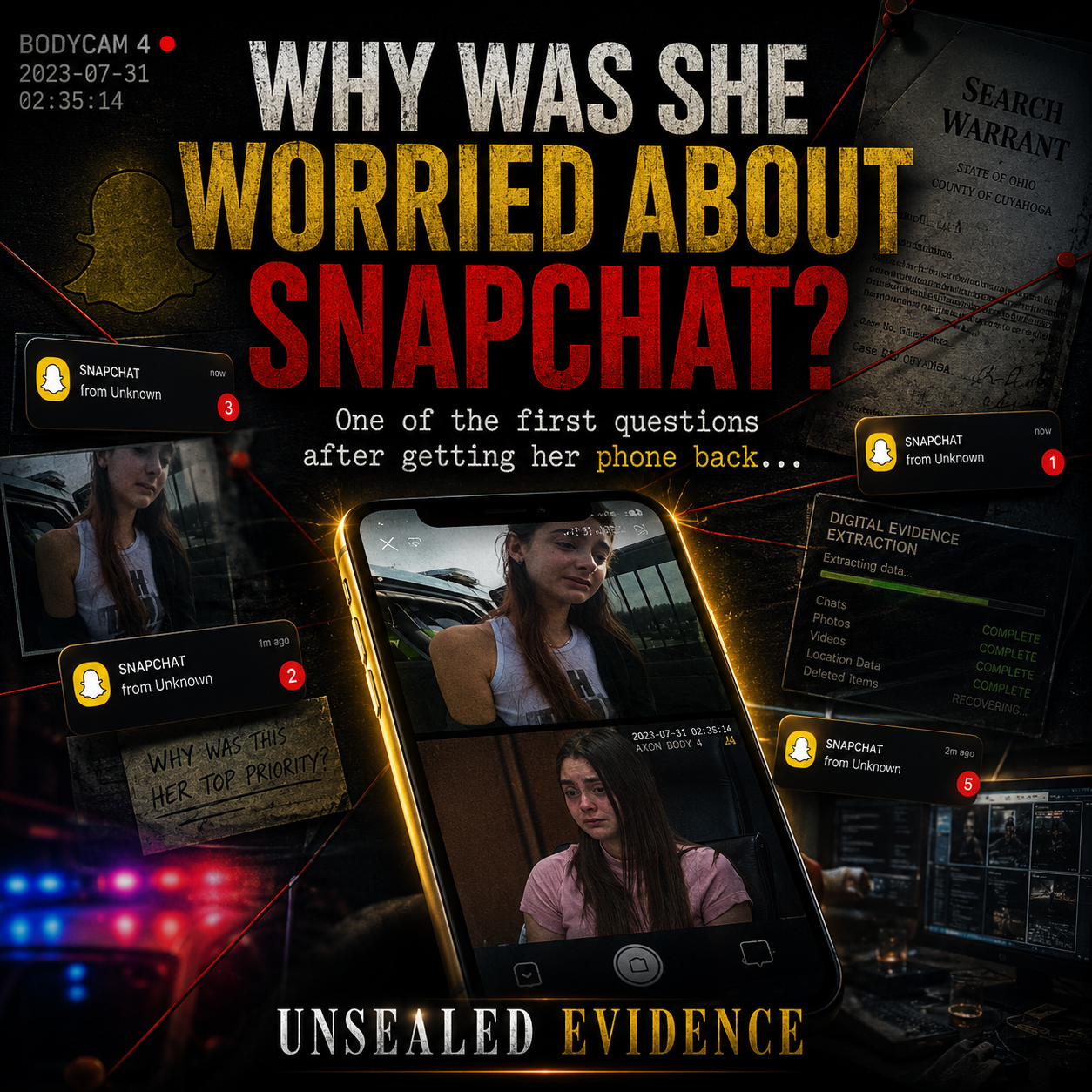
Why Were Snapchat Messages One of Mackenzie Shirilla's First Concerns After the Crash?
Newly released bodycam footage from the Mackenzie Shirilla case is sparking debate online after a conversation about Snapchat messages took center stage shortly after investigators returned her phone. For critics of Mackenzie Shirilla, the exchange raises uncomfortable questions about priorities, mindset, and what seemed most important in the aftermath of a crash that killed Dominic Russo and Davion Flanagan.

More Than The Friend In The Backseat: Remembering Davion Flanagan
In many true crime stories, victims slowly become overshadowed by the person responsible. But Davion Flanagan was more than a victim. He was an athlete, a mentor, a son, a friend, and a young man with dreams of becoming a barber. This is the story of who Davion was before the headlines.
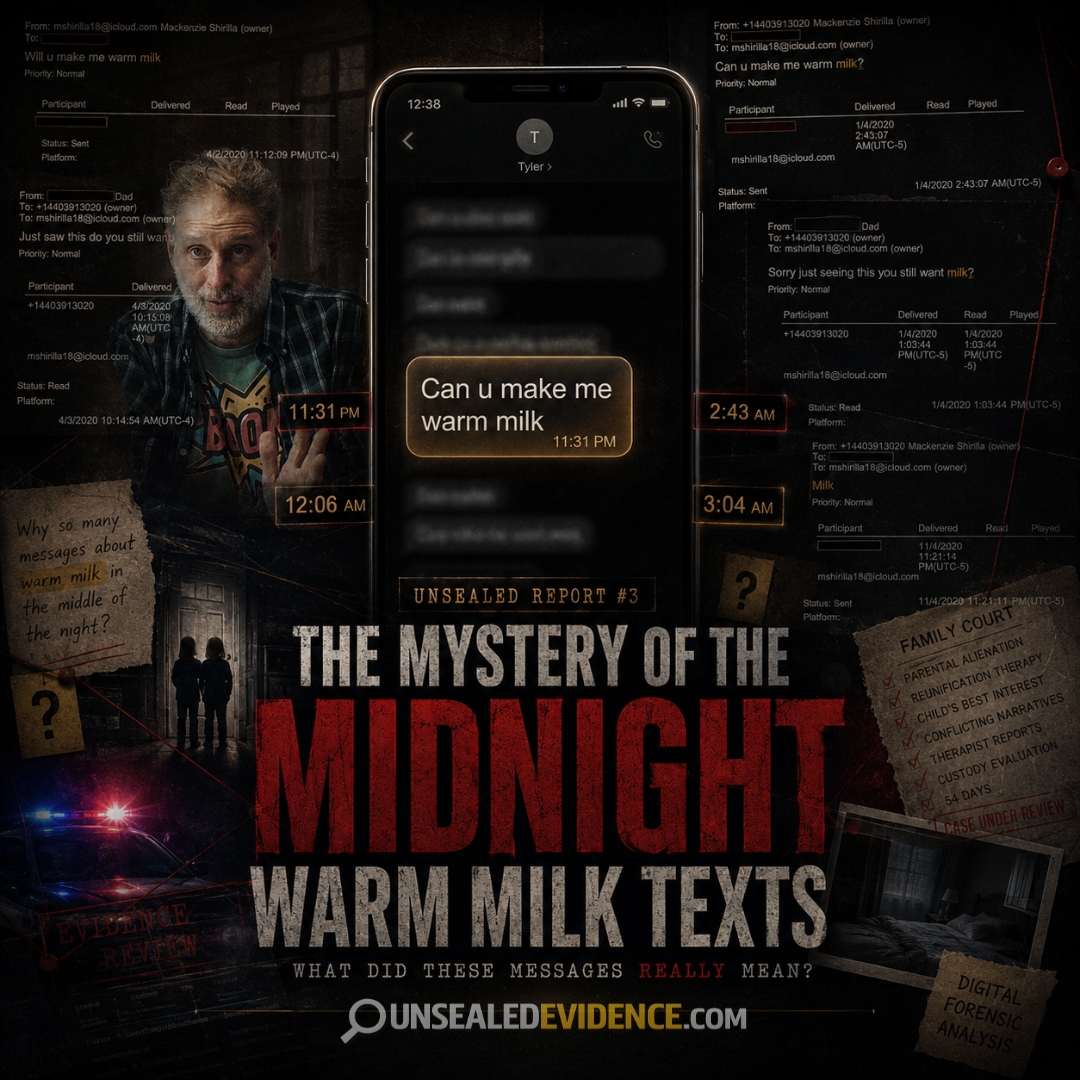
The Midnight Warm Milk Mystery: The Text Messages Raising New Questions About Mackenzie Shirilla's Home Life
Among the thousands of text messages extracted from Mackenzie Shirilla's phone, one recurring theme stands out. Over and over again, often after midnight and sometimes as late as 3 AM, Mackenzie repeatedly asked her father to make her warm milk. The requests appear frequently enough to draw attention, but it is the surrounding circumstances that have left many people asking whether these messages were really about milk at all.