
Three Boys, Three Teenagers, and a Story That Refused to Die
This extensive case file documents the legal saga known as the "West Memphis Three" (WM3), involving the 1993 murders of three eight-year-old boys—Stevie Branch, Michael Moore, and Christopher Byers—in West Memphis, Arkansas, and the subsequent conviction, imprisonment, and release of three teenagers: Damien Echols, Jason Baldwin, and Jessie Misskelley Jr.
For over three decades, this case has served as a crucible for the American justice system, exposing systemic vulnerabilities regarding cognitive bias, the validity of confession evidence, the reliability of forensic pathology, and the mechanisms of post-conviction relief. The case trajectory spans from the height of the "Satanic Panic" in the early 1990s, through the revolution in DNA technology in the 2000s, to the contemporary legal battles over advanced forensic testing in the 2020s.
While the legal status of the defendants was ostensibly resolved via an Alford plea in 2011, the question of actual innocence and the identity of the true perpetrator remains an active and contentious legal dispute. As of 2025, the case is currently the subject of renewed forensic inquiry following a landmark Arkansas Supreme Court ruling allowing for M-Vac DNA testing of preserved crime scene evidence.
Where Fear Took the Lead
A Town on Edge: Faith, Fear, and the Shadow of the Satanic Panic
To understand the investigative decisions made in May 1993, one must situate the crime within its specific temporal and cultural locus. West Memphis, Arkansas, is a working-class community located directly across the Mississippi River from Memphis, Tennessee. In 1993, the region was heavily influenced by conservative religious values and was experiencing the tail end of the "Satanic Panic," a widespread moral panic in the United States characterized by allegations of ritual abuse and organized occult criminal networks.
This sociological climate created a predisposition among law enforcement and the public to interpret ambiguous evidence through the lens of ritualistic activity. Local juvenile officers, specifically Jerry Driver, had already been monitoring local teenagers for signs of "occult" involvement, which was often conflated with heavy metal fandom, interest in horror literature, and non-conformist dress.1 This pre-existing bias would prove instrumental in the immediate targeting of Damien Echols following the discovery of the bodies.
The Last Afternoon the Boys Were Seen Alive
The victims were three second-grade students who were best friends and members of the local Cub Scout troop:
-
Stevie Branch: Described as an energetic and popular student.
-
Michael Moore: Known as a quiet and studious boy, often seen riding his bike with the group.
-
Christopher Byers: A child who had previously struggled with behavioral issues and was noted by his stepfather, John Mark Byers, to have been disciplined shortly before the disappearance.1
The Hours That Changed Everything
On the afternoon of May 5, 1993, the three boys were released from school and spent the afternoon playing together.
-
18:00–18:30: Witnesses reported seeing the three boys riding their bicycles together in the neighborhood. One witness observed Michael Moore riding his bike while Stevie Branch rode on the back.
-
18:30: The boys were seen entering the wooded area known as "Robin Hood Hills," a four-acre patch of bayou, drainage ditches, and dense underbrush sandwiched between a residential subdivision, a truck stop, and Interstate 40.
-
19:00–20:00: When the boys failed to return for dinner, their parents began a frantic search of the neighborhood.
-
20:00: John Mark Byers reported his stepson Christopher missing to the West Memphis Police Department (WMPD).
-
Nightfall: A search party was organized, but operations were suspended after dark due to the treacherous nature of the terrain, which included snake-infested waters and steep, muddy banks.
What the Water Gave Back
The search resumed at first light on May 6. In the early afternoon, Juvenile Officer Steve Jones spotted a black tennis shoe floating in a muddy ditch that ran through Robin Hood Hills. This discovery led investigators to dredge the ditch.
Bound, Submerged, and Silent
-
Submersion: The bodies of all three boys were found submerged in the creek, held down by tree limbs/logs.
-
Binding: The victims were naked and "hog-tied." Their ankles were drawn up to their wrists behind their backs using their own shoelaces. The knots were intricate, with the left wrist tied to the left ankle and the right wrist tied to the right ankle.
-
Clothing: The boys' clothes were found nearby, some turned inside out or submerged in the water, but curiously, there was no blood found on the clothing itself, nor was there a significant amount of blood found on the banks of the ditch or the surrounding vegetation.
Autopsies, Assumptions, and the Birth of a Narrative
The autopsies revealed brutal injuries that immediately steered the investigation toward a violent, personal, and potentially ritualistic motive.
|
Victim |
Cause of Death |
Injuries Noted |
|
Stevie Branch |
Drowning / Multiple Injuries |
Severe blunt force trauma to the head and face; drowning fluid in lungs.2 |
|
Michael Moore |
Drowning / Multiple Injuries |
Blunt force trauma; drowning; similar binding marks.2 |
|
Christopher Byers |
Multiple Injuries |
Most severe injuries: Fractured skull, deep lacerations to the inner thighs and groin, removal of the scrotum and penis (degloving). Unlike the others, his cause of death was primarily the injuries rather than drowning alone.2 |
When Interpretation Replaced Evidence
The State Medical Examiner and local police interpreted the injuries to Christopher Byers—specifically the removal of genital tissue—as intentional castration performed with a knife. This interpretation was the cornerstone of the prosecution's theory that the murders were a Satanic sacrifice.
However, the lack of blood at the scene was a critical anomaly. If a castration had occurred while the child was alive and on the bank, a massive amount of blood should have been present. The absence of blood led to two competing theories: either the murders happened elsewhere and the bodies were dumped (which the mud on the bodies contradicted), or the injuries occurred post-mortem in the water, preventing blood spatter.
Early in the investigation, police also suspected sexual assault because the victims' anuses appeared dilated. This detail would later be incorporated into false confessions. However, subsequent forensic review confirmed that no semen was present and that anal dilation is a common physiological result of post-mortem muscle relaxation and decomposition, effectively ruling out sexual assault.
A Theory in Search of Proof
Suspects by Aesthetic
Within 24 hours of the discovery, Chief Inspector Gary Gitchell announced to the media that the police were considering "cult activity" as a primary motive. This declaration was driven by the nudity, the binding style, and the "castration" of Byers.1
Instead of following physical leads outward from the crime scene, the investigation turned inward toward the community's non-conformist elements. Jerry Driver, the juvenile probation officer, directed attention to 18-year-old Damien Echols. Echols was a high-school dropout who lived in a trailer park, wore black trench coats, listened to heavy metal music, and studied Wicca (Neopaganism). To the investigators, Echols fit the profile of a "cult leader."
Through Echols, police identified his best friend, Jason Baldwin (16), a quiet student with a solid academic record, and Jessie Misskelley Jr. (17), an acquaintance known to have a significantly lower IQ (measured at 72) and a reputation for being easily influenced.
The Man Who Walked Away Covered in Blood
While the focus tightened on the teenagers, a significant lead emerged that pointed in a different direction. On the night of the murders (May 5) around 8:40 PM, a man entered the Bojangles restaurant located roughly one mile from the crime scene.
The Call That Should Have Changed the Case
Marty King, the manager, reported that a black male entered the restaurant. The man was "mentally disoriented," wearing a white cap, black pants, and a blue shirt. Critically, the man was covered in mud and blood. He entered the women's restroom, where he remained for a short time. When he left, employees found blood smeared on the restroom walls.
An Evidence Trail That Vanished
Officer Regina Meek responded to the call but essentially interviewed the manager through the drive-through window and did not detain the man or enter the restroom to secure the scene. The man was allowed to leave.
The following day, detectives scraped blood samples from the restroom wall. However, in a catastrophic chain of custody error, these blood scrapings were lost by the West Memphis Police Department and were never tested.
This incident remains one of the most significant "what ifs" in the case. The defense would later argue that this man could have been the actual killer, washing up after the crime. The prosecution dismissed it as a "red herring," arguing it was absurd for a killer to enter a public restaurant.
Twelve Hours, Forty Minutes on Tape
Lacking physical evidence linking Echols or Baldwin to the crime scene (no fingerprints, no blood, no fibers found at the scene matched them), the police focused on breaking the "weakest link": Jessie Misskelley Jr.
On June 3, 1993, Misskelley was brought in for questioning. Despite being a minor with an intellectual disability, he was interrogated for approximately 12 hours without his parents or an attorney present.
How a Story Was Fed Back to a Teenager
Only roughly 40 minutes of the 12-hour interrogation were recorded. The unrecorded hours involved the application of the Reid Technique, a psychological method designed to elicit confessions by minimizing the moral consequences of the crime and offering alternative scenarios.
Facts That Wouldn’t Line Up
The resulting confession contained numerous factual errors that contradicted the physical evidence, suggesting Misskelley was guessing to please his interrogators:
-
Time of Crime: Misskelley initially stated the murders happened in the morning. When police pointed out the boys were in school, he changed the time to the afternoon.
-
The Bindings: When asked how the boys were tied, Misskelley said "rope." The detective corrected him, asking if it could have been shoelaces. Misskelley then agreed to shoelaces.
-
Sexual Assault: Under pressure, Misskelley claimed the boys were raped and that he saw Damien Echols rape one of the boys. Autopsies confirmed no sexual assault occurred.
‘I Just Wanted to Go Home’
Almost immediately after the confession was recorded, Misskelley recanted. He stated that he had only told the officers what they wanted to hear so that they would let him go home. Despite the recantation and the glaring inconsistencies, the confession provided the probable cause necessary to arrest Echols and Baldwin later that day.
Courtrooms, Not Crime Scenes
The trials were severed because Misskelley refused to testify against Echols and Baldwin. Under the Bruton rule, his confession could not be used against them if he was not available for cross-examination. This resulted in two separate trials: one for Misskelley, and a joint trial for Echols and Baldwin.
Convicted on Words Alone
The Confession Is the Case
The state's case relied almost entirely on the confession. Prosecutor John Fogleman argued that despite the "minor" inconsistencies, the confession contained "core truths" only a perpetrator would know. They also used the "satanic" angle to explain the lack of motive.
What the Jury Was Asked to Ignore
Defense attorney Dan Stidham presented a robust alibi and expert testimony on coercion.
-
The Alibi: Witnesses placed Misskelley at a wrestling match in Dyess, Arkansas (40 miles away) until roughly 6:00 PM, and then at a drive-in and a party later that evening. This timeline made it physically impossible for him to be in Robin Hood Hills at the time of the murders.
-
Dr. Richard Ofshe: An expert sociologist and specialist in false confessions testified. He analyzed the interrogation transcript and concluded it was a "classic example" of police coercion, exhibiting the characteristics of a "compliant false confession" where the suspect adopts the police's narrative to escape the immediate stress of interrogation.
Life, Plus Forty Years
On February 5, 1994, the jury convicted Misskelley of one count of first-degree murder (Michael Moore) and two counts of second-degree murder. He was sentenced to life imprisonment plus 40 years.
Trying Two Teenagers for a Belief System
Without Misskelley's confession, the state had to construct a case against Echols and Baldwin using circumstantial evidence and the assertion of a cult motive.
When Religion Took the Witness Stand
The prosecution called Dr. Dale Griffis to testify as an expert in the occult and Satanism.
-
Credentials: Griffis held a doctorate from Columbia Pacific University, an unaccredited correspondence school. He had never interviewed the defendants or visited the crime scene prior to trial preparation.
-
Testimony: Griffis testified that the murders bore the "trappings of occultism." He cited the date of the murders (claiming it was a pagan holiday), the nudity of the victims, and the "castration" of Byers as ritualistic elements. He also claimed that the number three (three victims, three killers) was powerful in satanic lore.
-
Impact: Defense attorneys argued this testimony was character assassination designed to prejudice the jury against Echols' lifestyle. However, in the Bible Belt setting, the testimony was devastatingly effective, effectively putting Echols' books, music, and clothing on trial.
Common Objects, Extraordinary Claims
The state introduced scant physical evidence, none of which was definitive:
-
The "Lake Knife": A serrated survival knife was recovered from a lake behind Jason Baldwin's home. The state argued this knife was used to mutilate Christopher Byers. The prosecution claimed the serrations on the knife matched the "saw-tooth" wounds on Byers' groin.
-
The Blue Wax: A speck of blue candle wax was found on a victim’s shirt. Police found blue candles in Echols' bedroom. The state implied a connection, though the chemical composition was common to many commercial candles.
-
Fibers: A red polyester fiber found on a victim’s shirt was said to be "microscopically similar" to a bathrobe found in Echols' home. Forensic experts for the defense noted that red polyester is an extremely common material (used in millions of garments) and that "microscopically similar" is not a definitive match.
No Blood, No DNA, No Scene
The defense focused on the complete lack of blood, DNA, or fingerprints connecting the teens to the scene.
-
Alibi: Echols testified that he was home talking on the phone with girls and later went to his father’s house. Phone records supported parts of this, but not the entire evening. Baldwin claimed he was doing yard work and watching TV.
-
Mental Health: Dr. George Woods testified that Echols suffered from serious mental illness (depression, delusions) but was not a psychopath capable of organized, ritualistic murder. This backfired slightly, as the prosecution used it to paint him as unstable.
Death, Life, and a Town That Moved On
The jury found both defendants guilty on all counts.
-
Damien Echols: Sentenced to Death by lethal injection. The jury cited the "heinous, atrocious, and cruel" nature of the crimes as an aggravating factor.
-
Jason Baldwin: Sentenced to Life Imprisonment Without Parole. The prosecution had not sought the death penalty for Baldwin due to his age (16) and lack of prior record.
The Case Wouldn’t Stay Buried
Following the convictions, the case entered a long period of appellate stagnation. The Arkansas Supreme Court affirmed the convictions in 1996, and Judge David Burnett—who presided over the original trials—routinely denied petitions for retrial under Arkansas Rule 37 (ineffective assistance of counsel).
However, outside the courtroom, the narrative was shifting. The release of the HBO documentary Paradise Lost: The Child Murders at Robin Hood Hills in 1996 brought the case to a global audience. The filmmakers, Joe Berlinger and Bruce Sinofsky, were originally granted access by the victims' families, who hoped the film would document the justice served. Instead, the film documented what appeared to be a miscarriage of justice, highlighting the lack of evidence and the bizarre behavior of one of the stepfathers.
People the Jury Never Met
The defense investigation began to focus on individuals the police had cleared or ignored.
A. John Mark Byers (Stepfather of Chris Byers)
John Mark Byers became a focal point of suspicion due to his behavior in the documentaries.
-
The Knife Gift: In a pivotal scene in Paradise Lost, Byers gave a folding hunting knife to the film crew as a gift. The defense team later tested this knife and found blood in the hinge mechanism. The blood type was consistent with both John Mark Byers and Christopher Byers (they shared a blood type). However, DNA testing was inconclusive due to the small sample size.
-
Behavioral Red Flags: Byers had a history of brain tumors and took multiple psychotropic medications. He was prone to violent outbursts and gave conflicting accounts of his whereabouts. However, by the late 2000s, Byers had turned against the state, believing the WM3 were innocent, and directed his suspicion toward Terry Hobbs.
B. Terry Hobbs (Stepfather of Stevie Branch)
Suspicion shifted heavily toward Terry Hobbs in the 2000s.
-
Behavior: Unlike the flamboyant Byers, Hobbs was quiet and guarded. However, witnesses later reported he had a history of physical abuse toward his family.
-
The Alibi: Hobbs claimed he was at home during the murders. However, new witnesses surfaced claiming they saw Hobbs with the boys shortly before they disappeared, directly contradicting his sworn testimony.
Science Finally Enters the Room
In 2007, the defense team, now funded by the "Free the West Memphis Three" support fund (which had raised substantial sums from donors worldwide), commissioned a massive review of the physical evidence using modern technology.
Table 3: 2007 DNA Testing Results
|
Evidence Item |
DNA Result |
Significance |
|
Crime Scene Ligatures |
No DNA matching Echols, Baldwin, or Misskelley. |
Exclusion of defendants from the primary murder weapon. |
|
Victim Clothing |
No DNA matching defendants. |
Exclusion of defendants. |
|
Hair in Ligature (Stevie Branch) |
Mitochondrial DNA Match: Terry Hobbs |
A hair found tied into the knot binding Stevie Branch matched the maternal line of his stepfather, Terry Hobbs. This was the first physical evidence linking a specific suspect to the crime scene.5 |
|
Hair on Tree Stump |
Mitochondrial DNA Match: David Jacoby |
Matches a friend of Terry Hobbs who admitted being with him that night. |
This evidence was explosive. While mitochondrial DNA is not unique to an individual (it is shared by all maternal relatives), the probability of a random match was low (approx. 1.5% of the population), and the presence of both Hobbs' and Jacoby's DNA profiles at the scene—when Hobbs claimed not to be there—was highly inculpatory.
When the Wounds Told the Truth
Perhaps the most damaging blow to the prosecution's 1994 theory came from the re-examination of the autopsy photos by world-renowned forensic pathologists, including Dr. Werner Spitz, Dr. Michael Baden, Dr. Vincent Di Maio, and Dr. Janice Ophoven.
The "Knife Wound" Debunked:
The 1994 conviction relied on the theory that the boys were mutilated with a knife (the "lake knife"). The new experts unanimously concluded that the injuries to Christopher Byers' groin and face were not caused by a knife.
-
Mechanism: The jagged, irregular wounds were consistent with post-mortem animal predation—specifically turtles, fish, and crustaceans present in the bayou.
-
Evidence of Life: There was no hemorrhage (bleeding) in the underlying tissues of the "mutilation" wounds. This proved the injuries occurred after the heart had stopped beating. This completely dismantled the theory of ritual torture and sacrifice.
What Happened After the Jury Retired
In 2008, the defense presented an affidavit regarding the Echols/Baldwin jury foreman, Kent Arnold. The affidavit alleged that Arnold had discussed the case with his attorney prior to deliberations and had introduced Jessie Misskelley's inadmissible confession into the jury room, using it to persuade other jurors to convict. This constituted a violation of the defendants' constitutional rights to a fair trial and confrontation.
Freedom Without Answers
A Door Cracks Open
Based on the new DNA evidence and the forensic pathology reports, the defense filed for a new evidentiary hearing. The lower court (Judge Burnett) denied the motion. However, on November 4, 2010, the Arkansas Supreme Court heard oral arguments.
The Court ruled that the new DNA evidence, combined with the new pathology evidence, was sufficient to raise a reasonable probability that a jury would not convict. They ordered a new evidentiary hearing at the circuit court level. This was effectively an order for a mini-retrial where all new evidence could be presented.
Everyone Had Something to Lose
The State of Arkansas was in a precarious position.
-
Risk of Acquittal: If the hearing proceeded, the defense would present the Hobbs DNA match and the animal predation experts. The state's original case (Misskelley's confession and the "cult" theory) would likely collapse, leading to a full acquittal.
-
Civil Liability: A full acquittal after 18 years of imprisonment (and a death row tenure) would open the state to massive civil lawsuits for wrongful imprisonment and malicious prosecution, potentially costing millions of dollars.
The Defense was also in a difficult position.
-
Time: A new trial could take years to organize. Damien Echols’ health was deteriorating on death row.
-
Uncertainty: Even with strong evidence, a local jury in Arkansas might still convict based on lingering bias.
-
Jason Baldwin's Stance: Baldwin initially refused to plead guilty to anything, wanting full exoneration. However, he eventually agreed to a deal to save Echols from the risk of execution.
Walking Out Guilty While Saying ‘I Didn’t Do It’
The parties negotiated a rare legal resolution: the Alford Plea.
Under North Carolina v. Alford (1970), a defendant can plead guilty while simultaneously asserting their innocence. They admit only that the state has sufficient evidence to convict them, and they accept the plea to avoid a harsher sentence (like the death penalty).
Terms of the Agreement:
-
Vacated Convictions: The original 1994 convictions were vacated.
-
Guilty Plea: The defendants entered Alford pleas to first and second-degree murder.
-
Sentence: They were sentenced to 18 years and 78 days—exactly the amount of time they had already served.
-
Suspended Sentence: They received a suspended sentence of 10 years. This meant they were free, but if they committed a felony within the next 10 years, they could be re-incarcerated for 21 years.
-
Legal Status: They remain convicted felons on the record. This status generally precludes them from suing the state for compensation.
The Hearing:
On August 19, 2011, the three men appeared before Judge David Laser. In a highly emotional proceeding, they entered their pleas and were immediately released. Damien Echols stated, "I am innocent, and I will continue to work to clear my name." Prosecutor Scott Ellington maintained that the state still believed they were guilty but acknowledged the difficulty of retrying the case after so much time.
The Fight After the Prison Gates
The release of the West Memphis Three did not end the case. For the men, the Alford plea was a mechanism for freedom, not justice. They have spent the years since their release fighting for full exoneration and the identification of the true killer.
The Evidence Still Has a Voice
Following their release, the defense team sought to utilize Arkansas Act 1780, a statute designed to allow post-conviction DNA testing for individuals claiming actual innocence.
The target of this new testing was the M-Vac System. Unlike the swabbing used in 2007, the M-Vac uses a wet-vacuum to pull DNA from the deep fibers of evidence, such as the shoelaces used to bind the boys. This technology can recover DNA that was previously undetectable.
The Legal Hurdle:
The State of Arkansas blocked the testing, arguing that Act 1780 only applies to individuals who are currently incarcerated. Since the WM3 were released, the state argued they had no standing to petition for testing.
When the Law Finally Looked Back
Damien Echols challenged this interpretation in court.
-
2022 Ruling: The Circuit Court judge, Tonya Alexander, denied the request, agreeing with the state's strict interpretation of the law.
-
2024 Supreme Court Reversal: On April 18, 2024, the Arkansas Supreme Court issued a landmark 4-3 decision reversing the lower court. The Supreme Court ruled that the legislative intent of Act 1780 was to remedy wrongful convictions and that a petitioner does not need to be incarcerated to seek testing if they can prove the scientific potential of the new method. This ruling granted Echols the right to test the evidence.
Waiting on What the Fibers Remember
As of early 2025, the logistical process of transferring the evidence (specifically the ligatures and clothing) to Bode Technology for M-Vac testing is underway. The "Free the West Memphis Three" movement, now evolved into a broader innocence project effort, is offering a reward of $200,000 for information leading to the arrest of the true killer.
The suspended sentences imposed by the Alford plea expired in 2021, meaning the threat of re-incarceration for the original charges is no longer active. However, the felony convictions remain on their records unless a full exoneration (likely requiring a DNA match to another suspect) is achieved.
What the Evidence Says — Side by Side
Table 4: Suspect Profile Comparison
|
Feature |
The West Memphis Three |
Terry Hobbs |
"Bojangles Man" |
|
Motive Theory |
Satanic Ritual (Cult) |
Domestic Rage / Accidental Killing |
Random Act / Mental Illness |
|
Physical Evidence |
None (Excluded by 2007 DNA) |
Hair in Ligature (DNA Match) |
Blood (Evidence lost by police) |
|
Alibi |
Corroborated by witnesses (Misskelley at wrestling; Echols on phone) |
Contradicted by witnesses (Neighbors saw him with boys) |
N/A |
|
History of Violence |
Minor juvenile offenses; no history of severe violence |
Documented history of domestic abuse |
Apparent disorientation/blood on person |
|
Confession |
Yes (Misskelley - Coerced/Retracted) |
No |
No |
Table 5: Evolution of Forensic Interpretation
|
Evidence |
1994 Prosecution Theory |
2024 Scientific Consensus |
|
Groin Injuries |
Intentional castration by knife (Ritual). |
Post-mortem animal predation (No bleeding). |
|
Anal Dilation |
Evidence of sexual assault/rape. |
Post-mortem sphincter relaxation (Decomposition). |
|
Lake Knife |
Murder weapon used for castration. |
Excluded; injuries not consistent with serrated blade. |
|
Ligature Knots |
Intricate knots proving premeditation. |
Standard shoelace knots; hair trapped inside matches Hobbs. |
|
Confession |
"Core truth" despite errors. |
Classic coerced-compliant false confession (Reid Technique). |
Legally Guilty, Factually Unfinished
The case of the West Memphis Three stands as a stark testament to the fallibility of the criminal justice system when subjected to the pressures of community hysteria and cognitive bias. The convictions of Echols, Baldwin, and Misskelley were secured not through physical evidence, but through a narrative of fear that exploited the "Satanic Panic" of the era.
The subsequent unraveling of the state's case—driven by the very science (DNA) and forensic pathology that was unavailable or ignored in 1994—strongly suggests that the three men are innocent. The presence of Terry Hobbs' DNA in the ligature binding Stevie Branch remains the most significant unaddressed lead in the case.
While the Alford plea of 2011 brought a measure of freedom, it did not bring truth. The ongoing efforts in 2024 and 2025 to utilize M-Vac technology represent the final chapter in this saga. Until the biological material on the bindings is definitively identified, the murders of Stevie Branch, Michael Moore, and Christopher Byers remain an open mystery, and the West Memphis Three remain in the paradoxical state of being legally guilty but widely considered factually innocent.
🕯️ Learn More • Reflect • Remember
If this case stayed with you, these resources may help you understand the investigation, process the impact, or honor the victim.
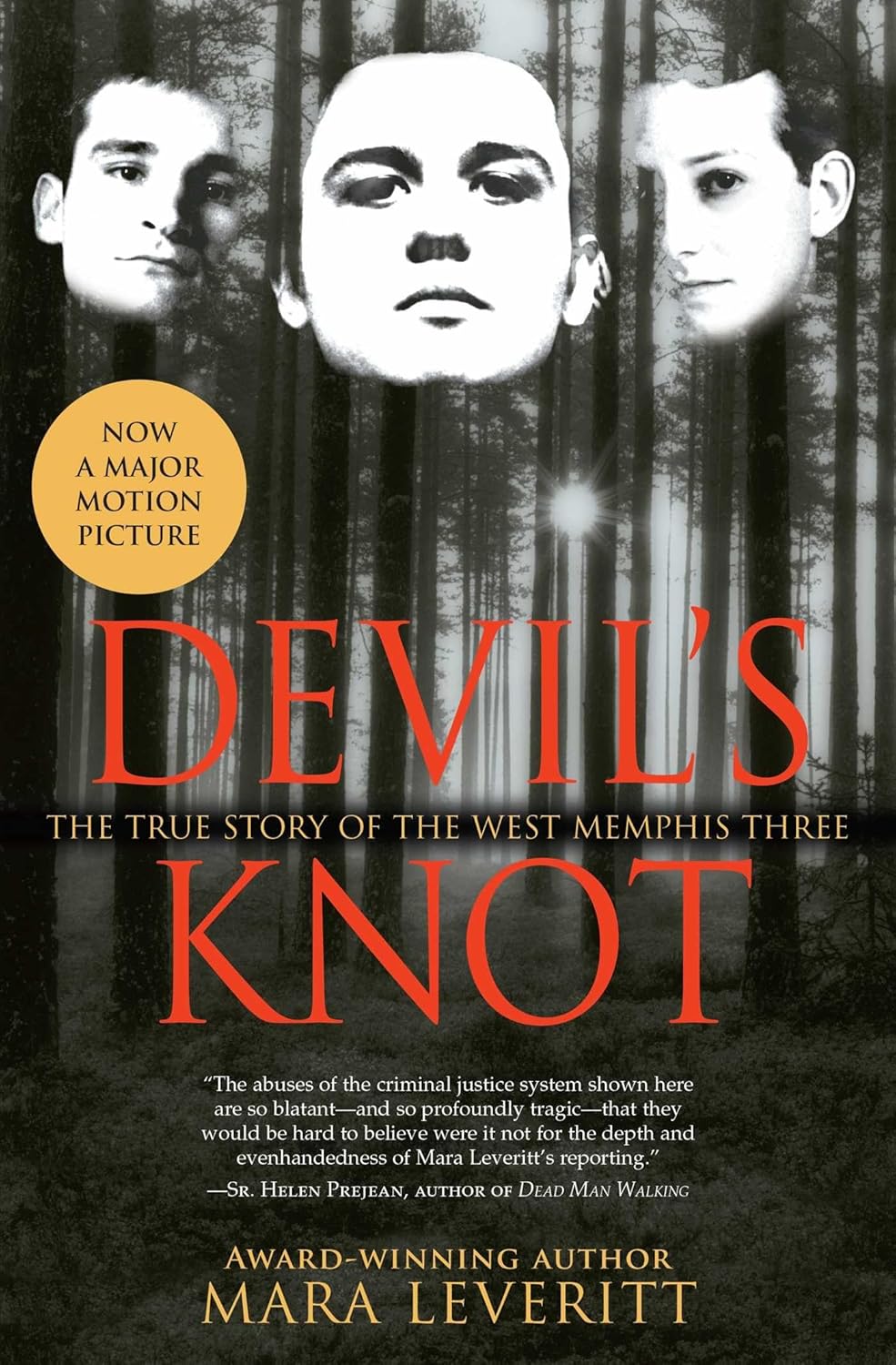
This book provides a comprehensive narrative of the West Memphis Three case, tracing events from the 1993 murders through the arrests, trials, convictions, and years of appeals. Author Mara Leveritt documents courtroom proceedings, evidentiary disputes, and the social climate surrounding the case, offering readers a chronological understanding of how the investigation unfolded and why it became so widely debated. This book is recommended for readers seeking a thorough, fact-driven account of the case from start to finish.
👉 Read on Amazon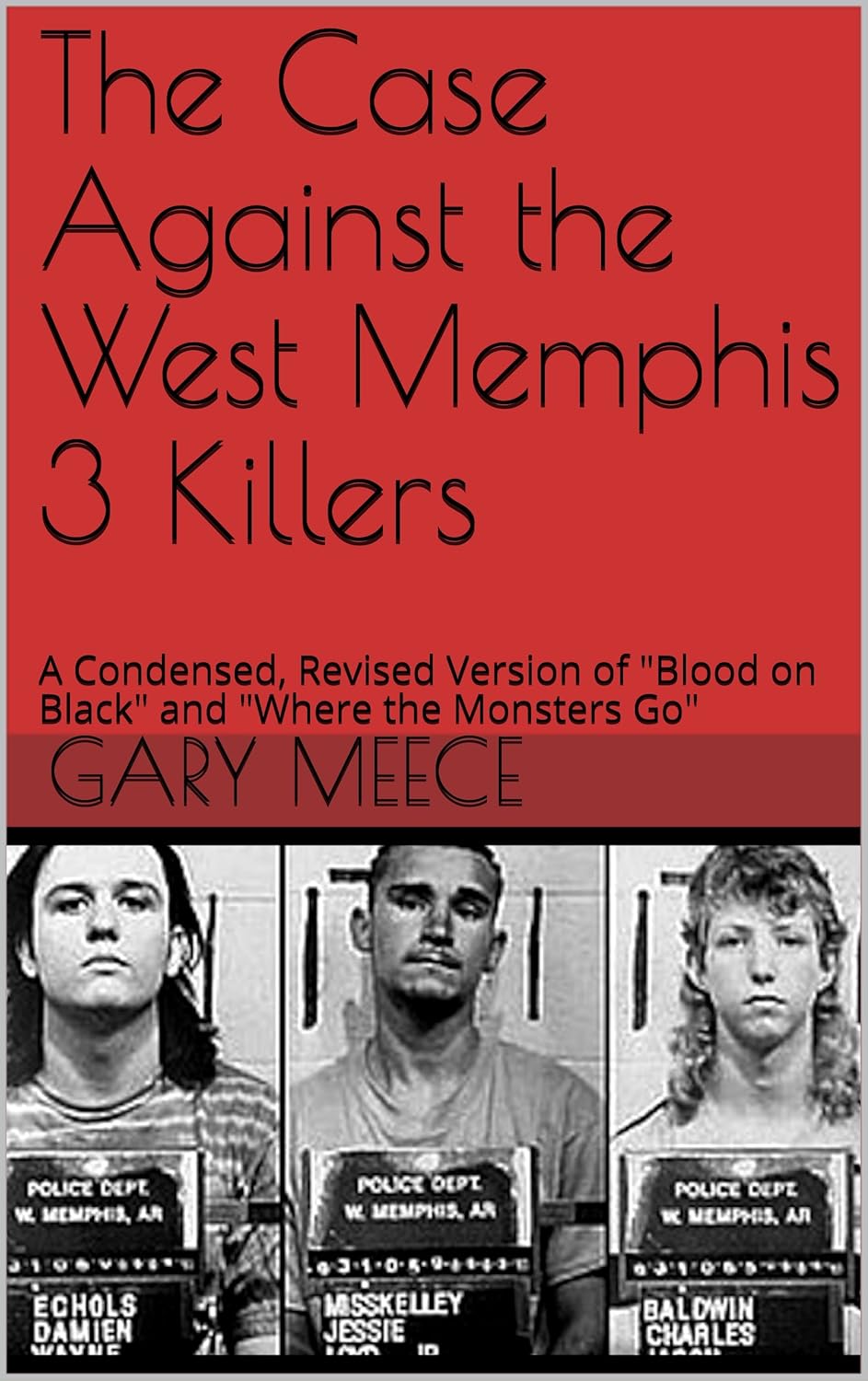
This book re-examines the evidence presented at trial and the methods used during the investigation, focusing on inconsistencies, disputed testimony, and forensic interpretations that have fueled ongoing debate. Author Gary Meece analyzes how the case was built and why questions about the convictions persist decades later. This book is recommended for readers who want a focused analysis of the evidence and legal arguments surrounding the case.
👉 Read on Amazon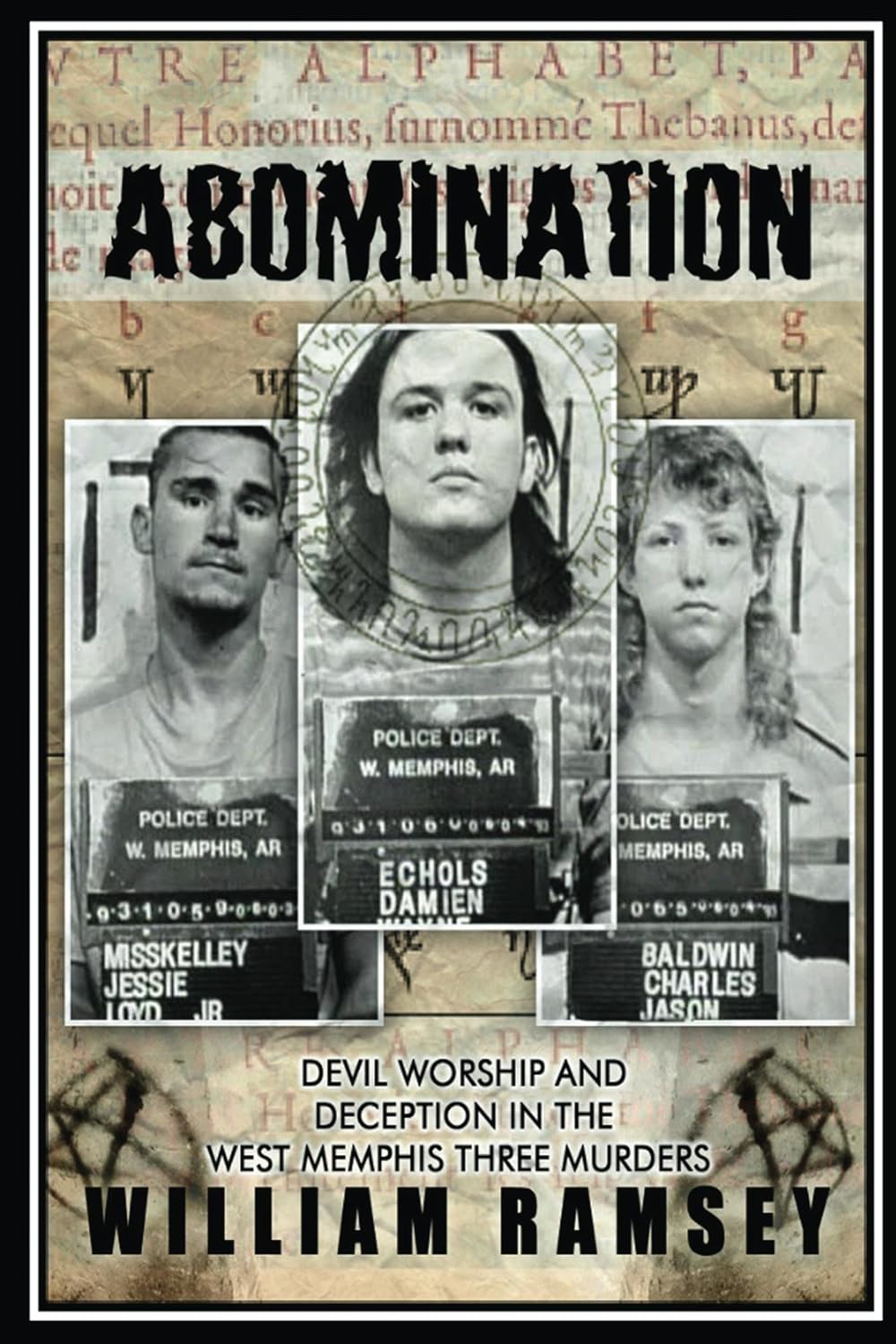
This book examines how allegations of satanic ritual abuse and occult influence became intertwined with the West Memphis Three case. Author William Ramsey explores the cultural climate of the early 1990s and how fear, rumor, and belief shaped public perception and investigative direction during the case. This book is recommended for readers interested in understanding the broader cultural and social context surrounding the investigation.
👉 Read on AmazonDisclosure: Some links may be affiliate links. If you purchase through them, Unsealed Evidence may earn a small commission at no extra cost to you.
Continue Investigating

Christmas Eve Vanishing: The Camila Mendoza Olmos Story
Christmas Eve Vanishing: The Camila Mendoza Olmos Story Camila Mendoza Olmos, a 19-year-old college student in northwest Bexar County, Texas, disappeared on the morning of Wednesd
Behind the Locked Door: The Ty and Bryn Larson Custody Battle and the 54-Day Barricade
The Ty and Bryn Larson case became one of the most controversial and widely discussed family court stories in recent years after two Utah siblings barricaded themselves inside an u

The Guardians Who Didn’t Give Him Back: Jasper Michael Spears
The Guardians Who Didn’t Give Him Back: The Disappearance of Jasper Michael Spears The Hospital Visit That Started Everything Jasper Michael Spears was born on November 6,
The Strongsville Impact: The Deaths of Dominic Russo and Davion Flanagan
In the early morning hours of July 31, 2022, a devastating crash in Strongsville left 20-year-old Dominic Russo and 19-year-old Davion Flanagan dead after a Toyota Camry driven by
The Day the Silence Broke: A Human Account of the Carly Gregg Tragedy
March 19, 2024. A Tuesday. In the quiet, unassuming town of Brandon, Mississippi, a day that began with the mundane rhythm of school and work would spiral into a vortex of horror,
The Rugrats Coat Disappearance: The Killing of Na’Ziyah Harris Without a Body
Vanished After the Bus Stop: A Detroit Afternoon That Changed Everything On January 9, 2024, a thirteen-year-old girl stepped off her school bus on Detroit’s east side, wear
Dance Floor Deception: The Washington, Illinois Case of Robyn Polston and the Newborn at the Center of It All
The Night It Began at a School Dance In May 2023, inside a junior high school gymnasium in Washington, Illinois, colored lights reflected off polished floors as students gathered
Taken at Sears: The Abduction That Changed America Forever
Forensic and Socio-Legislative Analysis of the Adam Walsh Abduction and Its Impact on American Jurisprudence The abduction and murder of six-year-old Adam Walsh on Jul